Atlanta, GA - Tuesday April 21, 2026

Atlanta, GA

Event Date
Tuesday April 21, 2026

7:30 am - 5:30 pm

Available Credits

Up to 8 AIA HSW/LU CE Hour(s)
Up to 1 ADA Accessibility / Barrier-Free Req.
Up to 1 GBCI General Hour
Maggiano's Little Italy
3368 Peachtree Road
Atlanta, GA 30326
Registration Price

$100.00

Terms
Early Bird Discount! $30.00 off if purchased before Apr 7, 2026

JOIN US IN YOUR CITY • REGISTER BELOW • ATTENDANCE REPORTED ON A PER-PRESENTATION BASIS

Event Agenda

Tuesday, April 21, 2026

7:30 am

8:00 am

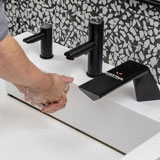
New Global Trends in Commercial Restroom Design
Sponsored By Excel Dryer, Inc.
Presented By Paul Marquez
1 AIA HSW/LU CE Hour(s)
1 GBCI General Hour
1 IDCEC HSW CEU(s)

This course explores the evolving landscape of commercial restroom design, highlighting the most significant changes and innovations of recent years.

Learning Objectives:
  1. Evaluate post-pandemic perceptions of commercial restrooms—based on a global survey of architects, facility managers, and restaurant operators—and identify emerging design priorities across stakeholder groups.
  2. Analyze innovative restroom products designed to minimize touchpoints and reduce germ transmission, and assess their impact on occupant health, safety, and overall user experience.
  3. Identify restroom products that contribute to building performance certifications such as LEED and WELL, and explain how specific product attributes align with sustainability and wellness criteria.
  4. Examine the environmental impact of building material choices during the use phase, and demonstrate how strategic product selection can generate long-term operational savings and improve occupant well-being.
  5. Apply lessons from real-world case studies to illustrate how product selection supports project goals, including cost efficiency, environmental performance, and alignment with client sustainability objectives.
Excel Dryer, Inc.

9:10 am

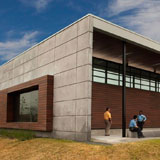
Sustainably Designed Rainscreen Wall Systems for Moisture Management
Sponsored By Fiberon
Presented By Brandon Greer
1 AIA HSW/LU CE Hour(s)
1 GBCI General Hour
1 GBCI LEED Specific BD+C
1 GBCI LEED Specific ID+C

We explore the critical aspects of moisture management in building design, focusing on the implementation of effective rainscreen wall systems and composite cladding. Participants will learn to identify potential moisture-related issues that can impact aesthetics, structural integrity, and occupant health.

Learning Objectives:
  1. Identify potential moisture management issues that can harm the design aesthetic, structural integrity and occupants’ health and safety, of a built environment.
  2. Explore color and design options for composite cladding, as well as the four basic components of rainscreen wall systems that help minimize rainwater passage and dissipate any remaining water, for an understanding of best practices, sustainability and end user wellness.
  3. Examine code criteria, LEED v4.1 BD+C and ID+C requirements, and other sustainability considerations to determine appropriate exterior wall design, to result in a rain screen system for effective moisture management.
  4. Review how composite cladding can meet LEED v4.1 BD+C and ID+C credit requirements that focus on resilient design, life cycle assessment and sourcing of raw materials.
  5. Discuss sustainable manufacturing practices that support LEED v4.1 BD+C and ID+C goals and help recycle plastic, conserve water, reuse waste, and save forests.
Fiberon

10:20 am

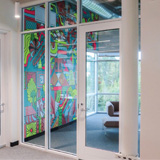
Beyond the Frame: Choosing Windows for Design and Performance Goals
Presented By Isaac Ratliff
1 AIA HSW/LU CE Hour(s)

This course provides a comprehensive overview of selecting the appropriate window products based on project-specific design and performance requirements. It covers various window types and their performance characteristics, examining factors such as location, building type, air and water infiltration, and design pressures.

Learning Objectives:
  1. Analyze how window function, including operation and usability, influences product selection to enhance occupant comfort and accessibility in various project applications.
  2. Examine key performance factors—air infiltration, water resistance, and structural integrity—to ensure durability, indoor air quality, and protection against environmental conditions.
  3. Identify critical code requirements such as egress, tempered glass, smoke evacuation, and energy efficiency to support safe building design and emergency preparedness.
  4. Assess aesthetic considerations, including finish options, color choices, and sightlines, to achieve both functional and design objectives.
All Seasons Architectural Windows

11:30 am

Smarter Railing Solutions: The Advantages of Panelized Aluminum & Steel Systems
1 AIA HSW/LU CE Hour(s)
1 ASLA LA/CES HSW PDH

Fortress Building Products, based in Garland, Texas, is a leading manufacturer specializing in innovative, durable, and sustainable outdoor building materials for residential, multi-family, and commercial markets. Known for "Outdurable Living," their portfolio includes steel/aluminum fencing, decking, framing, cladding, and pergolas.

Learning Objectives:
  1. Evaluate the key features and benefits of panelized railing systems.
  2. Compare the operational efficiencies and cost savings associated with panelized systems.
  3. Identify the value of the long-term durability and aesthetic appeal of aluminum and steel ornamental railings.
  4. Apply panelized railing code compliance and specifying.
Prime Source Building Products

12:30 pm

1:00 pm

Designing Aluminum Railings for Residential and Commercial Applications
Sponsored By Keylink
Presented By Jeff Surovi
1 AIA HSW/LU CE Hour(s)
1 ASLA LA/CES HSW PDH
1 IDCEC HSW CEU(s)

Key-Link Fencing & Railing is a leading manufacturer of aluminum rail and fence systems for residential and commercial installations.

Learning Objectives:
  1. Compare and contrast industry standards for railing materials including wood, iron, steel, PVC, and aluminum to determine which product offers the best sustainable, cost-effective and durable options.
  2. Evaluate the benefits and features of aluminum alloys and railing systems relating to strength, durability, powder coating, recyclability, best use, and applications.
  3. Identify relevant building codes and standards relating to aluminum railings systems including ADA, load testing & deflection, IBC, IRC, and LEED compliance specifications.
  4. Explore aesthetics, sustainability, safety features and standards of aluminum railing systems through case studies and applications.
Keylink

2:10 pm

Holding On To Safety: Creative Rail Solutions with Code in Mind
Sponsored By Livers Bronze
Presented By Lee Kirby
1 ADA Accessibility / Barrier-Free Req.
1 AIA HSW/LU CE Hour(s)

Handrails and guardrails are a safety feature that we easily take for granted as a common fixture in environments where stairs and balconies are featured, aiding us in our coming and going.

Learning Objectives:
  1. Determine the specific conditions that mandate the installation of ADA-compliant handrails for various environments, including stairways and ramps, to ensure compliance with accessibility regulations.
  2. Clearly outline the required dimensions, such as height, width, and clearance, for ADA-compliant handrails and explain how these measurements contribute to creating accessible and user-friendly spaces.
  3. Analyze key railing specifications, including material selection, gripping surfaces, and installation standards, while reviewing how these aspects align with broader ADA code requirements.
  4. Assess the specific requirements for railings on ADA-compliant ramps and stairs, focusing on details like slope, landing, and handrail continuity to ensure structures meet accessibility standards.
Livers Bronze

3:20 pm

Using Cable Railings in Public Buildings and Structures: A Demonstration of Strength & Beauty
Presented By Steve Akin
1 AIA HSW/LU CE Hour(s)

In any building, individuals come in contact with many different building materials — concrete, wood, steel, stone, and brick — all designed and engineered for their strength, durability and functionality.

Learning Objectives:
  1. Define stainless steel cable, fittings, and hardware.
  2. Implement a code-compliant cable design for the built environment.
  3. Recognize, using present-day case studies, the innovative use of stainless-steel cable, fittings, and hardware and the impact on occupant health and well being and balanced aesthetic.
  4. Explain the features of stainless-steel cable, fittings, and hardware and its use to ensure the safety of occupants.
Prime Source Building Products

4:30 pm

State CE Requirements

Georgia CE Requirements

Professional Licensing Boards Division
(478) 207-2440
Renewal Cycle: 
Biennial
Total Hours Required: 
24
Detailed Hours Required: 
16 HSW
Renewal Deadline: 
June 30, odd years